
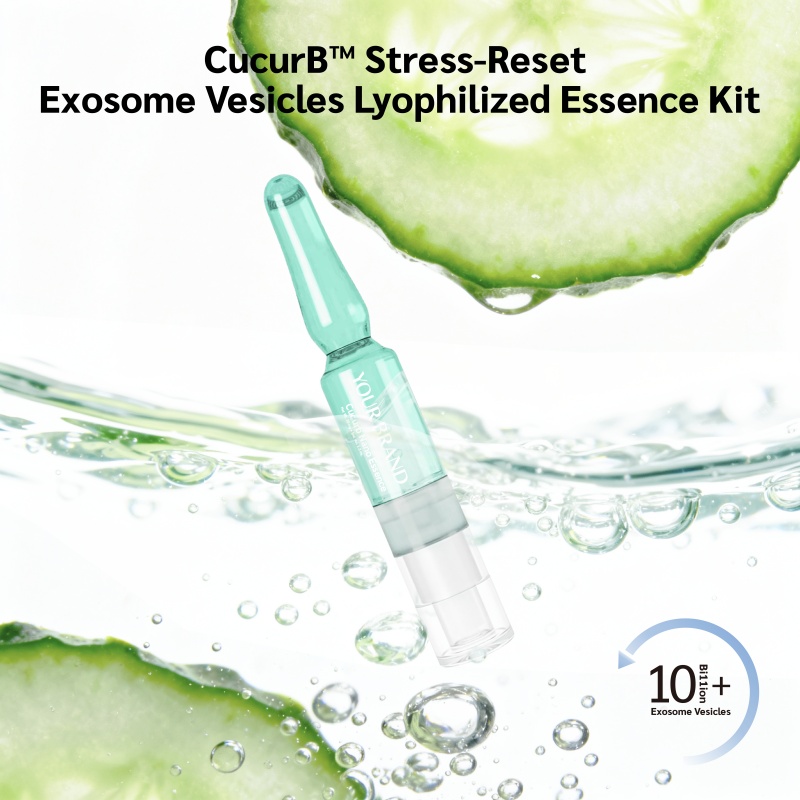
Over the years, botanical extracts have been available to skincare formulators for their familiar array of antioxidants, soothing agents and emollients. However, there is a limit to how familiar one can be. While conventional extracts offer a variety of ingredients, the demands of modern formulations are increasingly forcing the issue when it comes to ingredients that will produce measurable cellular outcomes. ExoAion, created by Omni Dynamics, is a plant-based active of a new type, not made from crushed leaves or macerated roots but instead based on nanoscale vesicles that preserve the biological signals intact.
The Structural Difference That Changes Everything
The basic unit of a traditional botanical extract is a chemical soup. It releases its secondary metabolites in the form of polyphenols, flavonoids, alkaloids etc. after solvent or mechanical processing of the plant. While there are documented benefits that these molecules offer, the stratum corneum is an effective barrier, and a lot of actives from extracts have a huge challenge to get into the skin in a meaningful concentration. There are different structures for plant-derived exosomes. They are lipid bilayer nanovesicles, with a typical diameter of 30-500 nm, which spontaneously package proteins, nucleic acids and metabolites from their source plant. This architecture provides two advantages over the conventional extract: the cargo can be fragile and the architecture is cross-kingdom cell uptake platform with good biocompatibility!
It is not just an academic difference. In 2022, the transcriptomic response of ginseng extract and green tea extract to human keratinocytes was directly compared with their exosome counterparts in a study published in Applied Biological Chemistry. The researchers observed that the action of the exosomes would be different from that of the extracts, and they believe they can be used as a cosmeceutical product because of this difference. That is, the exosome is not a more concentrated extract. It's a whole new organism.
Why Encapsulation Matters for Formulation Performance
The encapsulation property of exosomes addresses a problem formulators know well: many botanical actives are unstable. Polyphenols oxidize. Vitamins degrade. A specification sheet may indicate how potent a product is, but this strength is not always maintained until the product gets to the consumer. Exosomes provide a natural solution. The vesicles protect the encapsulated payload from environmental stressors and, since the vesicles are recognized by mammalian cells, they can transport the cargo with greater efficiency than free-form molecules diffusing across the skin barrier.
This has practical implications for product design. Higher inclusion rates may be necessary for a conventional extract to be detected, potentially resulting in color, odor, or stability issues. Formulators can develop at lower percentages while still maintaining efficacy narratives with an exosome ingredient because it delivers its cargo in a concentrated and protected form. Brands developing high-end products based on claims of repair, antioxidant defense or barrier support can benefit from this efficiency in terms of formulation flexibility and control of costs.
The Purity Standard That Separates Categories
Unlike traditional extracts, the exosome category has a quality issue. Botanical extract purity is relatively easy to characterize using marker compounds.The quality of an exosome ingredient is determined by vesicle integrity, particle concentration and the absence of co-isolated contaminants, which requires specific methodologies.
ExoAion does so with Omni Dynamics' “Five Golden Standards” framework, creating an ingredient with particle concentrations of 10¹⁰ to 10¹¹ particles per milliliter and a shelf life of more than two years. The company is the main drafting unit of the T/SDMDA 003-2026, China's first industry technical standard of plant-derived exosome-like nanovesicles, which lays the foundation for the baseline requirements of the specific product such as the minimum purity of 70% and minimum particle concentration of 109 particles per milliliter. This is a new quality vocabulary for brands used to assessing extracts based on marker compound percentages alone.
What This Means for the Next Generation of Skincare
It is not a denial of the wisdom of plants but an option. It's a recognition that the way the botanical active is presented is as important as the botanical itself. Ginseng extract has ginsenosides; ginseng derived exosome has ginsenosides in a delivery vehicle which would be recognized by the skin cells and then internalized. The biological conversation is different, but the bioactive cargo is related.
With automated aseptic lines and a capacity advantage of 10× compared to conventional industry standards, Omni Dynamics boasts Class-1000 clean rooms to provide their partners with a platform for pilot-stage R&D to commercial supply. The bioactive library includes over 300 natural sources and over 100 validated cell functions, where brands can choose sources that correspond to specific efficacy targets. For formulators who are looking at the tried-and-tested versus the new, ExoAion provides an interesting argument: Botanical origin is familiar, quality control is documented, and the technology is a new way to interact with skin. This is the kind of combination that isn't easy to duplicate with a traditional extract.

